Free makeup samples pose a rarely addressed issue in beauty guides: the single-dose format and its non-recyclable plastic packaging. Before multiplying requests for cosmetic samples, we recommend considering the entire chain, from the sachet to the sorting bin, to adopt a more cost-effective and responsible approach.
Plastic Waste from Makeup Samples: A Blind Spot in Beauty Deals
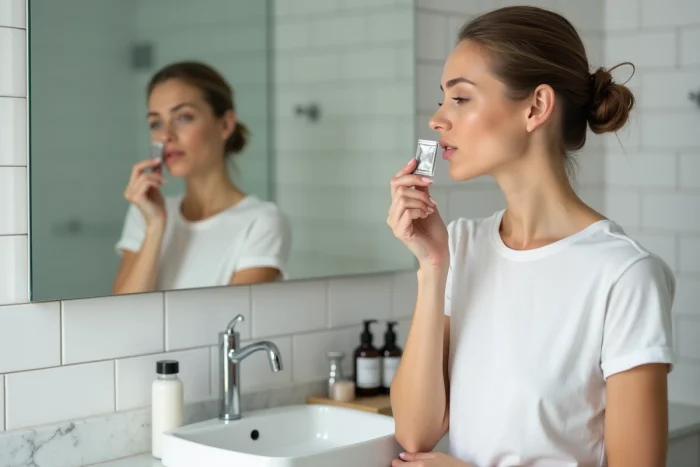
Single-dose sachets, pods, and miniatures distributed in stores or during promotional events generate a disproportionate volume of waste compared to the amount of product they contain. The packaging/product ratio of a foundation or mascara sample is significantly less favorable than that of a standard format.
The majority of cosmetic sample packaging is not recyclable in traditional recycling streams. Multi-layer flexible pouches (plastic-aluminum), thermoformed blisters, and miniature pipettes end up being incinerated or landfilled.
Since 2026, European regulations require brands to display allergen compositions on free samples. This regulatory change has reduced complaints related to skin reactions during flash makeup services, but it has not addressed the issue of over-packaging.
Some brands like Sephora have implemented empty packaging return programs in stores. Returning empty makeup containers allows access to loyalty points or discounts, which serves as a lever to limit ecological impact while continuing to enjoy the best free makeup deals available on the market.
Bookable Slots and Virtual Workshops: Free Channels Replacing the Counter
The model of free makeup at the counter without an appointment belongs to a bygone era. Since the introduction of bookable slots via the Sephora app in 2025, wait times have significantly decreased. Booking a slot through the app guarantees smooth access to free services, whereas spontaneous visits to the store remain unpredictable.
We are seeing a shift towards virtual makeup workshops. L’Oréal, through its Makeup Genius app, offers live interactive sessions with professional makeup artists, accessible without travel. These augmented reality workshops allow users to test foundation, lipstick, or eyeshadow shades directly on their face using their smartphone camera.
The benefits of these sessions go beyond simple product discovery:
- The skin tone and undertone diagnosis is conducted under real lighting conditions, avoiding common mistakes made in-store under artificial light
- No physical sample is necessary, eliminating the issue of plastic waste
- Recommendations are saved in a personal profile, reusable for future online or in-store purchases
For brands, these free virtual formats are gradually replacing the distribution of physical samples, with reduced logistical costs and a better conversion rate to purchase.
Live Makeup Challenges on TikTok: Free Kits and Influencer Strategy
Partnerships between cosmetic brands and TikTok content creators have gained considerable momentum. Revolution Beauty, for example, launched live makeup challenges in 2026 where active participants receive personalized kits of free products shipped to their homes.
The mechanism is simple: participate in the live event, recreate a look proposed by the influencer, and post the result with a dedicated hashtag. The kits distributed are not single-dose samples but standard formats, which changes the game in terms of perceived value and environmental impact.
TikTok challenges offer complete products, not disposable miniatures. This is a major differentiating factor compared to traditional channels (in-store counters, sample sites). The live format also creates direct interaction with the makeup artist, making the experience closer to that of an in-person workshop.
We recommend keeping an eye on the accounts of brands like Revolution Beauty, MAC Cosmetics, or NYX Professional Makeup on TikTok, as live announcements are often posted just hours before the event. Anticipation remains key to securing a kit.
Loyalty Programs and Packaging Returns: Maximizing Free Skincare and Cosmetics
Loyalty programs remain the most consistent channel for obtaining free makeup, provided that their mechanisms are effectively utilized. At Sephora, the Beauty Insider program allows points to be converted into standard-sized products during seasonal events. The birthday gift remains redeemable even after the date, a detail that few customers take advantage of.
At Yves Rocher, the point accumulation system related to skincare and cosmetic purchases grants access to full products after a few orders. Combining loyalty programs and the return of empty packaging multiplies the benefits without additional purchases.
Points to check before committing to a program:
- The validity period of points (some expire after twelve months of inactivity on the account)
- The threshold for converting to a free product, which varies significantly from one brand to another
- The possibility of combining flash promotional offers with loyalty points, which is not always permitted
The reflex to adopt: create a loyalty account at each brand where you regularly shop (Sephora, Nocibé, Yves Rocher, Marionnaud) and centralize your beauty purchases to reach thresholds more quickly.
A well-utilized loyalty program yields more than the hunt for samples, with the advantage of receiving usable formats over time rather than single doses destined for the trash. The most cost-effective free makeup is the one that avoids both spending and waste.