
The Southeast Asian region is home to over 20% of the world’s plant species and nearly 12% of known animal species, spread over a territory that accounts for only 3% of the Earth’s surface. Yet, some protected areas remain off the international radar, even though they harbor many taxa threatened with extinction.
The intensification of human activities, combined with increased climate pressures, accelerates the erosion of biological diversity in these limited spaces. Several discreet sites, however, play a crucial role in regional ecological resilience.
Why is Southeast Asia’s biodiversity so valuable in the face of climate challenges?
It is impossible to ignore the density of life that pulses in Southeast Asia. Its biodiversity forms a living patchwork, shaped by history and local uses. Here, every valley, every rice field, every forest nook is home to its share of endemic species, rare elsewhere or already extinct. This richness is not a product of chance: it is rooted in centuries of family farming and patient adaptations to the whims of climate and soil. The domestication centers present in the region have allowed inhabitants to invent a local agrobiodiversity, adapted to the conditions and needs of each territory.
When the climate disrupts the markers, Southeast Asia draws on the genetic diversity of its species to feed its population and protect agricultural balance. Some varieties forgotten by agro-industry, but still cultivated in reserves like Bokeo, are now revealing their ability to withstand drought, diseases, or new pests. Therefore, adaptation solutions do not come from distant laboratories, but often from fields and forests, maintained by rural communities who know their land inside out.
Preserving this diversity means ensuring future generations have the resources and knowledge needed to face upcoming upheavals. The management of natural resources, the transmission of agricultural techniques, and the protection of wildlife rely on the active participation of local populations, who shape an environment capable of withstanding climate uncertainty.
Here are the pillars that stand out in this region:
- Conservation: maintaining natural habitats, safeguarding threatened species, and restoring ecological balances.
- Agrobiodiversity: diversity of crops, local variety selection, and valuing adapted seeds, the foundation of resilient agriculture.
- Collective management: real involvement of rural communities in monitoring, protecting, and responsibly using natural resources.
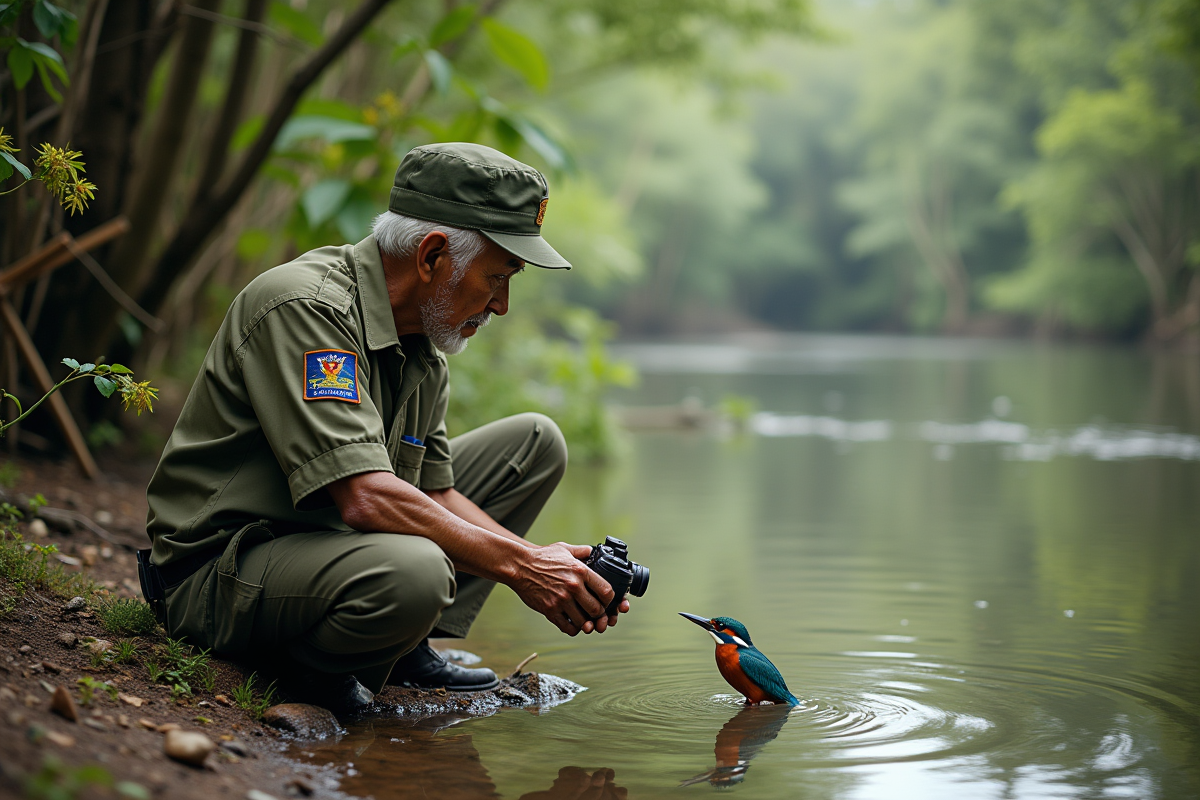
Discovering lesser-known reserves: hidden treasures and local initiatives to preserve wildlife
In Southeast Asia, some natural reserves are discreet, far from the beaten paths and the hustle and bustle of large cities. These national parks and protected areas offer refuge to wildlife that has become rare elsewhere: gibbons, hornbills, pangolins, or wild elephants still find a place to live away from threats. The Bokeo site in Laos is a perfect example. There, collaboration between villagers and conservation specialists is shaping innovative strategies to protect local biodiversity.
In these spaces, commitment is built at the grassroots level. Actions are multiplying: dialogue with local residents to curb poaching, sustainable tourism programs to promote wildlife without jeopardizing it, and knowledge transmission to the younger generation to instill the notion of living heritage. On-site, attentive observation replaces brutal intervention. People learn to recognize animal tracks, listen to the sounds of life, and respect the rhythm of the forest.
Some key initiatives stand out in the management of these sites:
- Collective resource management: participatory monitoring, training in preservation, and locally-led awareness campaigns.
- Local development: supporting village economies through ecotourism, creating sustainable supply chains, and valuing indigenous skills.
Precise monitoring tools, sometimes inspired by the work of researchers such as Jérôme Sueur or Samuel Challéat, allow for mapping and better understanding of animal population dynamics. This approach does not impose from above: each reserve, each community invents its method, according to its territory and needs, far from cookie-cutter models. The preservation of wildlife is played out here, daily, in dialogue and creativity.
The pulse of Southeast Asia’s biodiversity continues to beat, discreet yet tenacious. Behind the curtain of forests, between rice fields and mangroves, life organizes, persists, and invents its own exits. The question remains how long this fragile balance can hold against the pressures of the modern world.