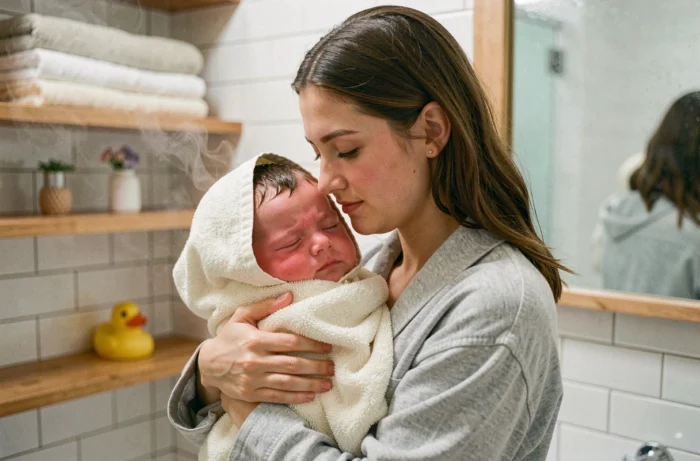
After the bath, your baby yawns, their eyelids close, and they seem ready to sleep within minutes. This transition from warm water to towel triggers a sometimes spectacular fatigue in infants, which surprises many parents. Understanding the mechanisms at play allows you to adjust the timing of the bath and support this need for rest without unnecessary worry.
Infant Thermoregulation: The Central Mechanism of Post-Bath Fatigue
A baby’s body manages heat very differently from that of an adult. During the bath, the warm water dilates blood vessels and slightly raises internal temperature. Upon exiting, the rapid drop in body temperature sends a signal for rest to the brain.
In adults, this cooling goes almost unnoticed. In infants, the thermoregulation system is still immature. The body expends considerable energy to regain its cruising temperature, which accelerates the onset of drowsiness.
When a very tired baby after the bath falls asleep almost instantly, it is often this thermal expenditure that is the main cause, well before the duration of the bath or the time of day.
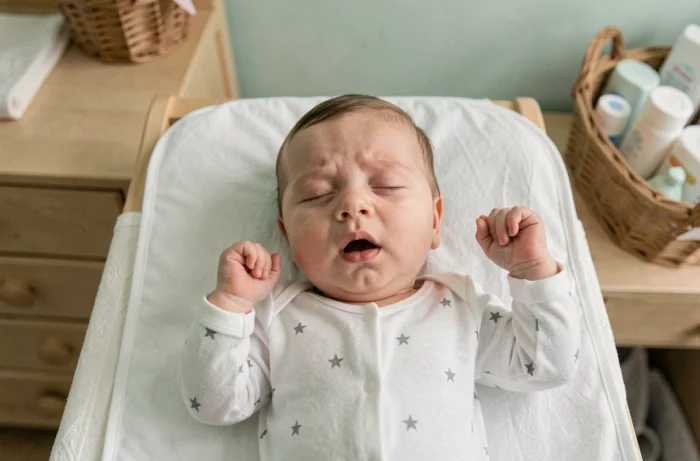
Sensory Stimulation in Water: Why Bathing Exhausts a Baby’s Senses
Have you noticed that your baby is particularly attentive during the bath? The water gliding over their skin, splashes, reflected light, and sounds amplified by the bathroom all create a stream of stimuli that their brain must process simultaneously.
The bath is one of the most intense sensory experiences in an infant’s day. Touch is engaged across the entire skin surface, which is rare at other times in the routine. The vestibular system (balance) is also at work, especially when the baby floats or changes position in the water.
This sensory overload is not negative in itself. It contributes to neurological development. However, it consumes a lot of resources and explains why the infant quickly transitions to a state of fatigue once out of the water.
The Cumulative Effect When the Baby is Already Tired
Bathing a baby who is already showing signs of fatigue or hunger significantly amplifies this exhaustion. The NHS actually recommends avoiding the bath when the infant is hungry or already tired, and instead placing the meal after the bath in the evening routine.
A baby bathed at the wrong time may collapse in tears rather than enjoy the moment. Observing their signals before preparing the water makes all the difference.
Warning Signs After the Bath: Normal Fatigue or Medical Signal
Post-bath drowsiness is common and expected. What is less common is fatigue accompanied by other unusual symptoms. Distinguishing between the two helps avoid both excessive worry and delays in addressing a real problem.
Normal fatigue manifests as yawning, a somewhat vacant stare, and slowing movements. The baby remains responsive if you talk to or touch them, and they return to their usual behavior after a nap or a feeding.
On the other hand, certain signs should alert you:
- The baby is difficult to wake or does not respond when you stimulate them, even gently.
- Their skin is abnormally pale, mottled, or they have a fever after a bath that was too hot.
- Their breathing is rapid, irregular, or wheezing, which has nothing to do with simple drowsiness.
- They refuse to eat after the bath when they should be hungry.
Deep drowsiness associated with poor feeding or abnormal breathing warrants prompt medical advice. If the baby is unresponsive or breathing poorly, pediatric emergency services are the appropriate response.

Adjusting the Bath Routine for a Peaceful Sleep Transition
Rather than fighting against this fatigue, it’s better to use it. The bath can become a powerful ally for sleep if a few practical conditions are met.
Prepare the Environment Before Undressing the Baby
The bathroom should be warm enough to limit thermal shock upon exit. Towel, diaper, and nightclothes within reach allow you to dress the baby in seconds, without them having time to cool down.
A short bath is more than sufficient. Infants do not need to soak for long to be clean. The shorter the bath, the less energy expenditure related to thermoregulation will be, and the more manageable the fatigue will remain.
Choose the Right Time of Day
The evening bath, often recommended as a bedtime ritual, works well when placed between the last meal and bedtime. The sequence of bath, feeding or bottle, then bed in the room creates a pattern that the baby learns to recognize.
If your child is too restless in the evening, trying the bath in the late afternoon or after the afternoon nap can make a difference. There is no universal time slot: the best time is when the baby is awake, calm, and satisfied.
After the Bath: Supporting the Transition to Sleep
Once dressed, hold your baby in your arms for a few minutes in a calm environment with dim lighting. Speak softly or hum. This transition phase between the sensory excitement of the bath and the calm of the bed helps the infant glide into sleep without struggle.
Placing the baby in their crib while they are drowsy but not yet asleep remains the most widely recommended safety practice for sleep. This also helps them gradually learn to fall asleep independently.
The baby’s fatigue after the bath is not mysterious once you understand the role of thermoregulation and sensory stimulation. A short bath, in a warm room, given at the right time transforms this episode of fatigue into a gentle transition to restorative sleep. Stay attentive to your child’s signals, before and after the bath: they will always tell you what they need.