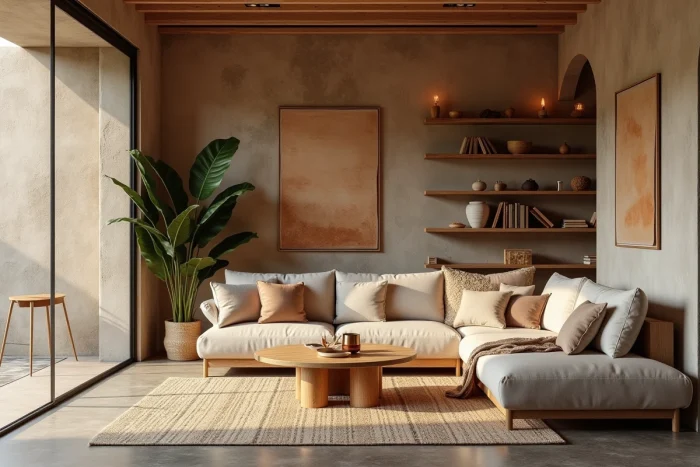
Transforming an interior doesn’t always require major renovations. Some targeted, sometimes inexpensive interventions are enough to give a strong identity to a home. The approaches listed here prioritize concrete techniques, specific materials, and aesthetic choices that stand out from standardized catalogs.
1. Exposed raw earth plaster on a load-bearing wall
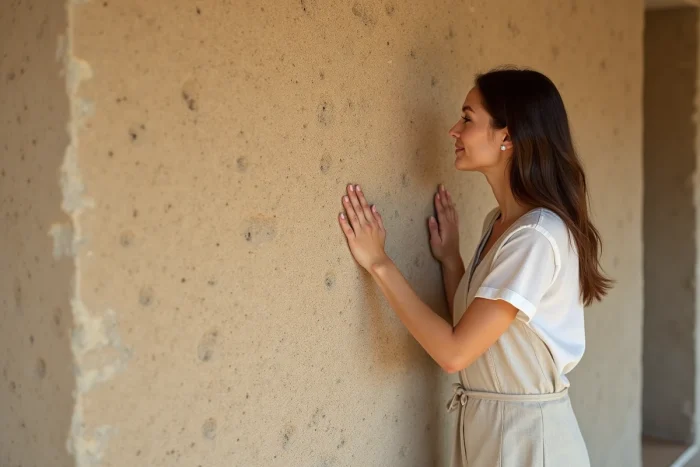
Raw earth plasters (clay, sand, plant fibers) offer shades and textures that no industrial paint can replicate. Applied to a load-bearing wall in the living room or an entryway, this type of coating becomes a full-fledged decorative element, not just a surface to hide.
The material absorbs ambient moisture and releases it, naturally regulating indoor comfort. Field reports vary on impact resistance in high-traffic areas: a natural fixer in the finish limits this risk without altering the raw appearance.
2. Expanded cork panels as decorative wall covering
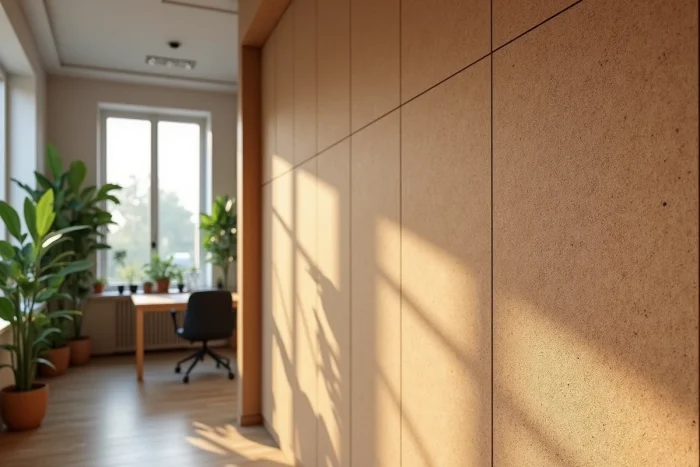
Expanded cork, used for insulation for decades, finds a second life as a visible cladding. Manufacturers like Pavatex offer panels whose grainy surface and warm brown color create a unique atmosphere, especially in a bedroom or office.
The cork remains visible and embraces its decorative role rather than being hidden behind a drywall. This choice requires accepting an imperfect aesthetic, far from smooth finishes. For those seeking complementary inspiration on this type of approach, resources like incroyablemaison.com document these methods in detail.
3. Integrated bookshelf around a ventilation technical box
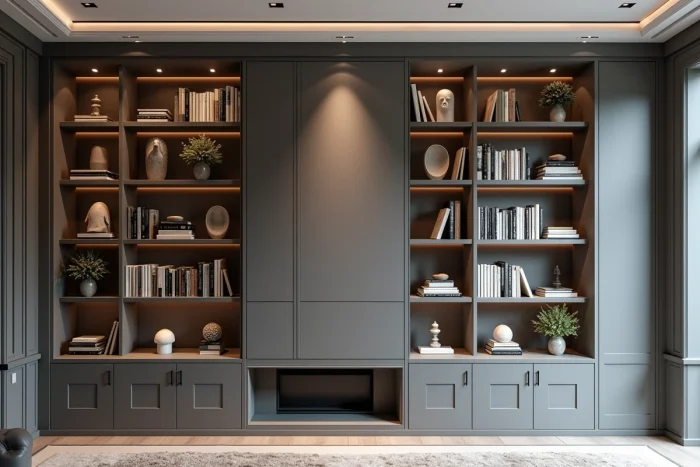
Ventilation ducts and technical boxes, often unsightly, can become the starting point for a custom piece of furniture. A bookshelf built around a VMC box transforms a constraint into a centerpiece of the living room.
This approach aligns with the logic of RE2020, which mandates efficient ventilation systems in new builds. Integrating the technical constraint into the furniture avoids wasting space and creates a layout that no one else has.
4. Mismatched cement tiles laid in a patchwork
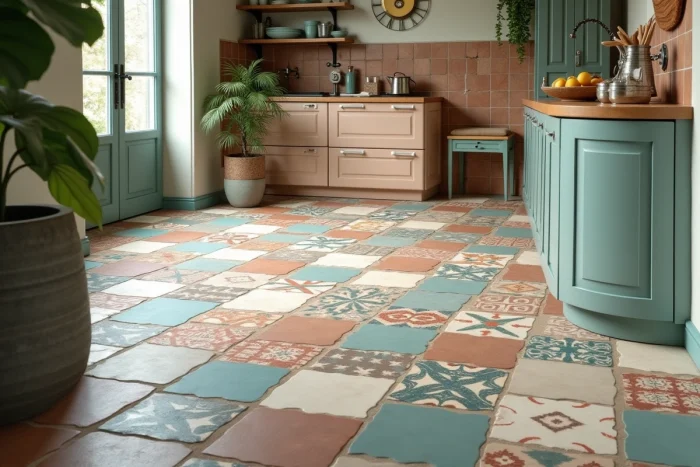
Installing cement tiles of different patterns and colors on the same surface creates a handcrafted patchwork effect. This technique works particularly well on small surfaces: kitchen backsplash, bathroom floor, entryway.
The classic pitfall is mixing too many pattern families, which results in a chaotic outcome. Limiting the palette to three or four dominant shades maintains visual coherence while preserving the element of surprise.
5. Wooden slat screens to separate without partitioning
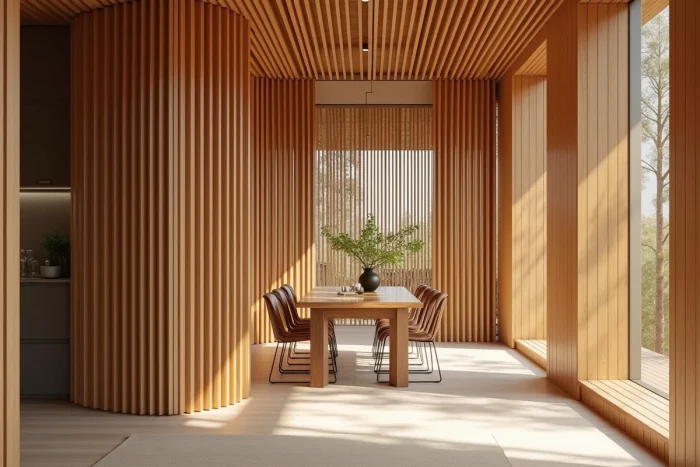
Slat screens (pine, oak, beech) allow for zoning without blocking natural light. Between an entryway and a living room, or between a workspace and a living area, this open partition filters the view while allowing air circulation.
The spacing between the slats radically changes the effect: closely spaced slats create semi-opacity, while spaced slats let light through. Raw wood, simply oiled, ages better than varnished wood.
6. Painted window and door frames in a bold color
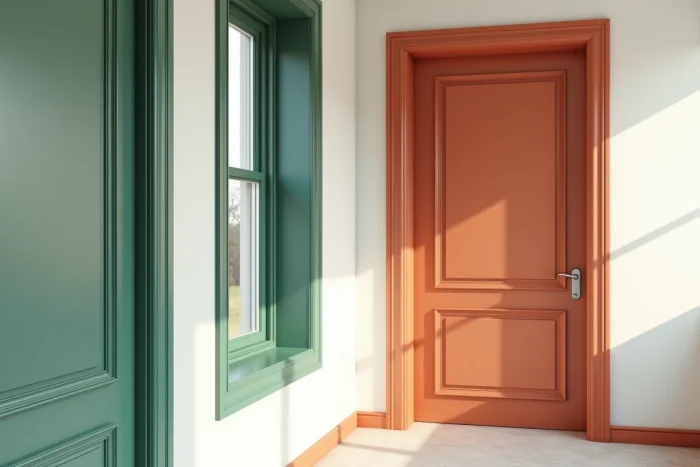
Painting window and door frames in a strong color (navy blue, sage green, terracotta) transforms an architectural detail into a visual signature. This very inexpensive technique works even better when the rest of the walls remain understated.
The tightening of thermal requirements pushes for replacing old joinery with high-performance models. This is the perfect time to choose a frame that contributes to the room’s design rather than remaining neutral.
7. Hanging lights at staggered heights above a table
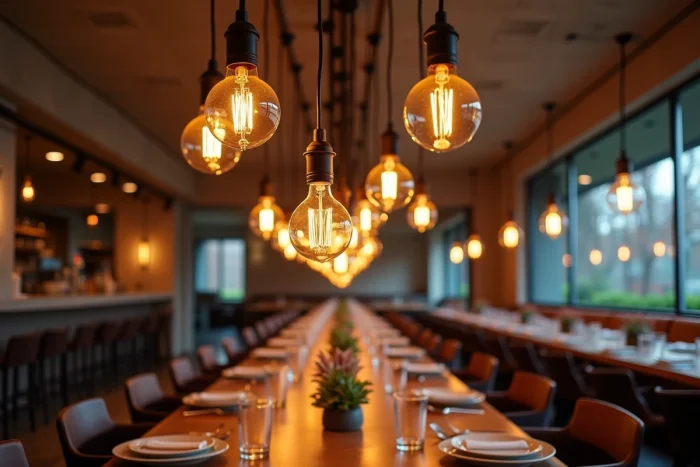
Hanging two or three lights at varying heights above a dining table creates a play of volumes absent from a single ceiling fixture. Models made from natural materials (rattan, woven fiber, blown glass) enhance uniqueness.
Light defines the atmosphere just as much as furniture. Varying light intensities with a dimmer allows for transitioning from functional lighting to a cozy ambiance without changing the installation.
8. Wall gallery composed of frames and three-dimensional objects
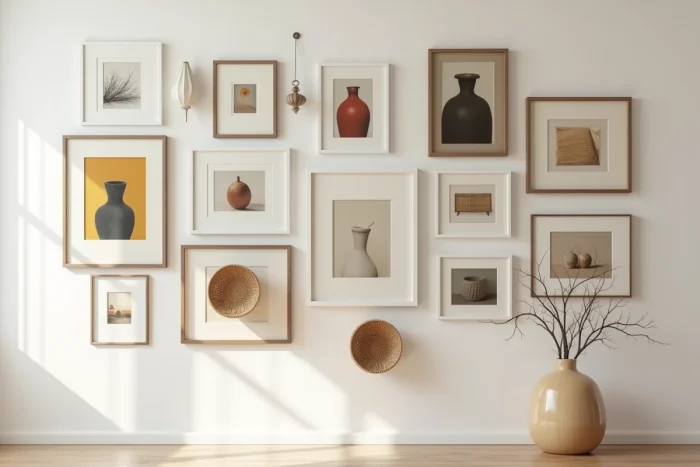
A wall gallery that mixes photo frames, vintage mirrors, small shelves, and three-dimensional objects avoids the “frame wall” effect seen everywhere. The addition of three-dimensional elements (hanging basket, suspended plant, decorative mask) breaks the flatness.
Some tips for successful composition:
- Start with the largest piece in the center, then arrange the elements around it while keeping a regular spacing
- Mix at least two types of frames (wood, metal, frameless) to avoid uniformity
- Incorporate one or two unframed objects to create depth on the wall
9. Layered rugs to structure a large living room
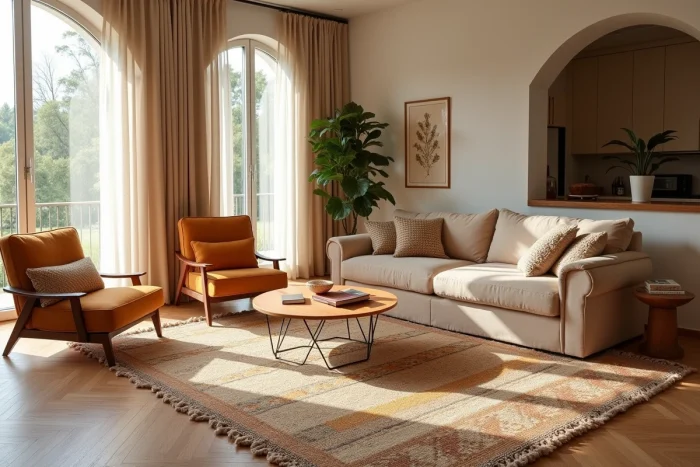
Layering a small patterned rug over a large solid rug delineates a space in the living room (reading nook, play area) without resorting to additional furniture. This technique adds acoustic and visual warmth.
Textures matter more than patterns in this type of composition. A raw jute rug under a short-pile wool rug creates a tactile contrast that is immediately perceived visually.
10. Accent wall in raw wood fibers
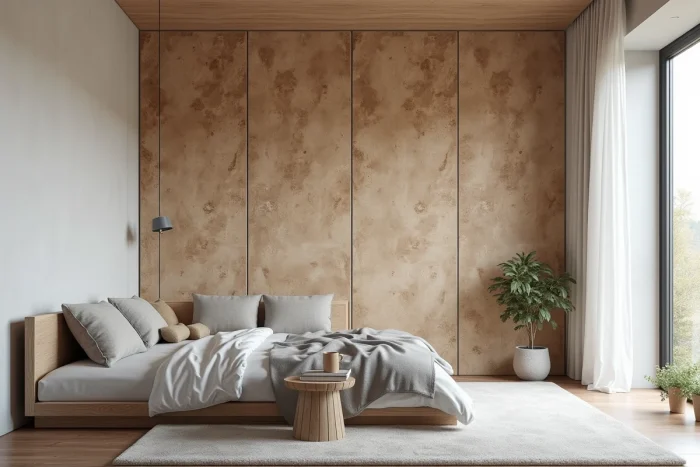
Wood fiber panels, usually hidden under cladding, can remain exposed as a decorative finish. Companies like Karibati document projects where bio-based insulation serves as the final covering, embracing irregularities as an aesthetic signature.
This choice requires checking compatibility with fire reaction standards for the relevant space. The visible bio-based material transforms a technical wall into a decorative element, provided one accepts a finish that strays from the smooth standards of painted plaster.
Each of these interventions operates on a different register: material, light, color, volume. Combining them all may not necessarily produce a harmonious result. It’s better to choose two or three paths that match your interior’s configuration and push them to the fullest, rather than multiplying effects on each wall.