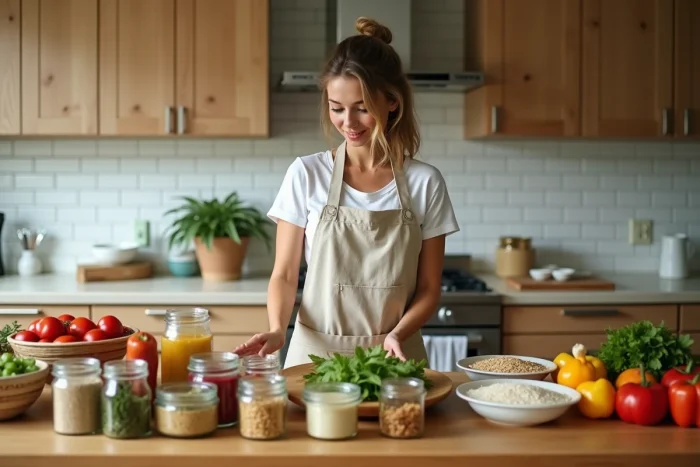
Batch cooking is based on the principle of pooling cooking and preparation, but its success depends on details that recipe collections often overlook: thermal management of prepared dishes, choice of containers, and sequencing of tasks during the cooking session. Here, we address the technical points that make the difference between a smooth week and a refrigerator cluttered with poorly stored preparations.
Cold chain and batch cooking: sanitary constraints to respect
The critical phase of a batch cooking session occurs after cooking, at the time of cooling. The AFSCA reminds us that recurring heatwaves weaken the domestic cold chain and require shortening cooling times. In practice, this means that each dish must reach refrigerator temperature as quickly as possible.
We recommend using shallow trays to spread out hot preparations. A dish of roasted vegetables poured into a shallow container cools much faster than a large bowl filled to the brim. Storage should aim for a temperature below 3 °C for prepared dishes, which is stricter than the standard setting of many household refrigerators.
If you are cooking for more than three days, freezing weekend meals remains the only reliable option. Always note the production date on each container. Glass containers with airtight lids offer better thermal inertia and prevent flavor transfer between dishes stored side by side.
For those who wish to structure their approach with a dedicated resource, you can discover the 3 Coups 2 Fourchette website, which offers a free PDF guide focused on the method and meal planning.
Sequencing a batch cooking session: the order of operations
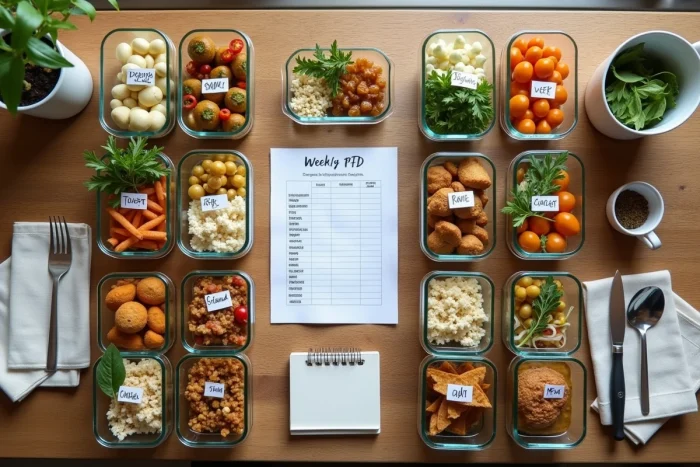
Most guides provide recipe lists without addressing sequencing, yet it determines whether your session will last two or four hours. The principle: start with long and passive cooking, then follow up with active preparations while the oven or stovetop is working.
Here is a priority order that works for a typical session:
- Put root vegetables (potatoes, carrots, beets) and proteins that require slow cooking in the oven during the first minutes of the session.
- Simultaneously start cooking grains and legumes (rice, lentils, chickpeas) on the stovetop, which require minimal supervision once brought to a boil.
- During these passive cooking times, prepare raw ingredients: wash and slice fresh vegetables for salads or toppings, prepare sauces and dressings, portion side dishes.
- At the end of the session, assemble composed dishes from the cooked and cooled elements, then distribute them into storage containers.
This sequencing allows for centralizing cooking methods and reducing energy consumption, a benefit that is rarely quantified but real when cooking two dishes simultaneously in the oven.
Menu planning and reducing food waste
Research from INRAE and Ademe shows that households that plan their meals over several days significantly reduce food waste compared to those who cook day by day. The effect is particularly pronounced on fresh products: fruits, vegetables, dairy products.
Planning menus before the shopping list remains the most effective lever against waste. The method involves first inventorying what remains in the cupboards, refrigerator, and freezer, then building the week’s menus around these ingredients before completing with a targeted shopping list.
Since 2024, Anses has included batch cooking in its public health messages as a lever to reduce food-related stress and mental load. This institutional positioning goes beyond the simple question of time savings: preparing meals in advance reduces daily decision fatigue, which leads to industrial dishes or home delivery.
Containers and portioning: adapting equipment to the method
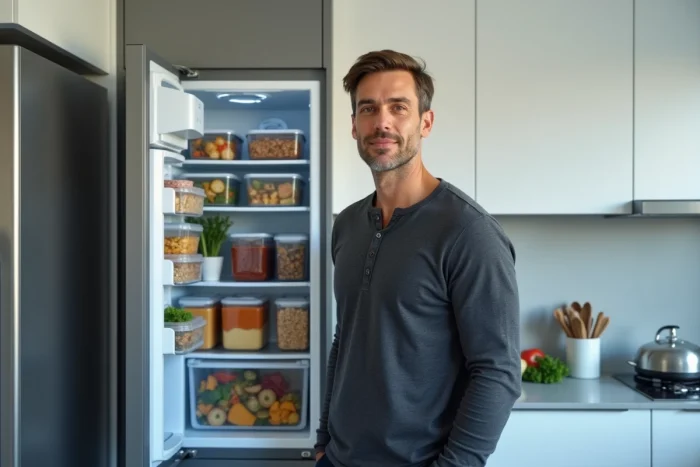
The choice of containers determines the quality of preservation and practicality in daily life. Glass remains the reference material for batch cooking: it goes from freezer to oven or microwave, does not retain odors, and does not warp.
We observe that rectangular containers optimize space in a refrigerator better than round formats. Planning for various sizes allows for storing both a family dish and an individual portion to take to work.
Portioning at the end of the session deserves special attention. Immediately distributing preparations into individual portions or by meal avoids reopening a large container multiple times during the week, which limits temperature variations and cross-contamination.
Batch cooking and PDF guide: structuring your practice over time
A dedicated PDF guide for batch cooking provides a value that isolated recipes do not cover: the weekly vision. The best resources include the shopping list, menu plan, session sequencing, and storage instructions in a single document.
Several hospital programs and occupational health services now use batch cooking as a tool for nutritional education. The CHU of Lille and occupational health services in Normandy have developed practical booklets to support patients and employees in this approach.
A good PDF guide covers the method before the recipes: preservation rules, compatibility between dishes to avoid ingredient duplication, and last-minute assembly suggestions. Recipes illustrate the method, not the other way around.
Batch cooking benefits from being treated as a technical skill rather than a collection of recipes. Mastering rapid cooling, intelligently sequencing cooking, and rigorously planning menus transforms this method into a sustainable routine, with measurable effects on food waste and the nutritional quality of weekly meals.