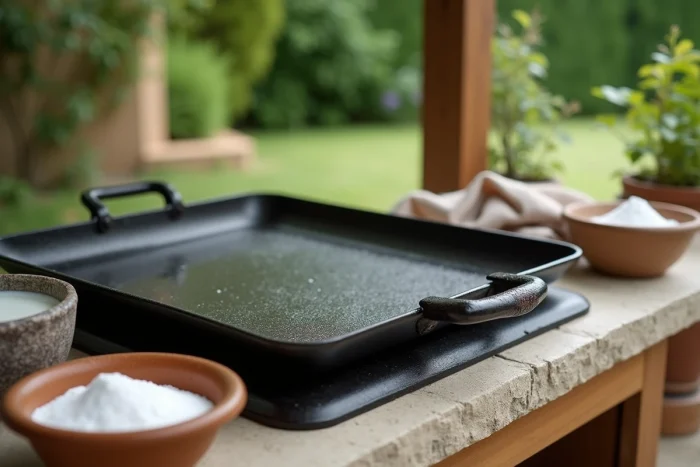
Enamelled cast iron reacts differently from stainless steel or rolled steel when in contact with abrasive tools and chemicals. Cleaning an enamelled cast iron griddle without damaging its coating requires knowing the appropriate gestures for this specific material, and especially avoiding those that are suitable for other surfaces but degrade the enamel. The ten techniques that follow each target a specific problem: cooked grease, charred residues, stubborn stains, or protection between uses.
1. Scrape the plate while hot with a rounded-edge stainless steel spatula
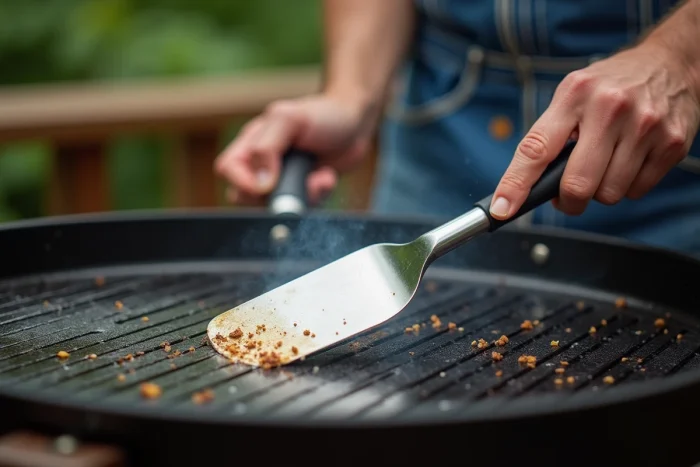
Hot maintenance remains the priority method according to specialized manufacturers: briefly heating the plate after use allows residues to detach before scraping, rather than waiting for complete cooling. Enamelled cast iron retains heat for a long time, which works in your favor.
Use a stainless steel spatula with a rounded or slightly beveled edge. A sharp right angle may chip the enamel if you press too hard. Work in steady movements, always in the same direction, to push the fats and residues towards the collection tray.
Among the tips for cleaning an enamelled cast iron griddle, this one remains the simplest and most effective on a daily basis. It prevents cooking leftovers from carbonizing as they cool.
2. Deglaze with cold water on a hot plate for controlled thermal shock
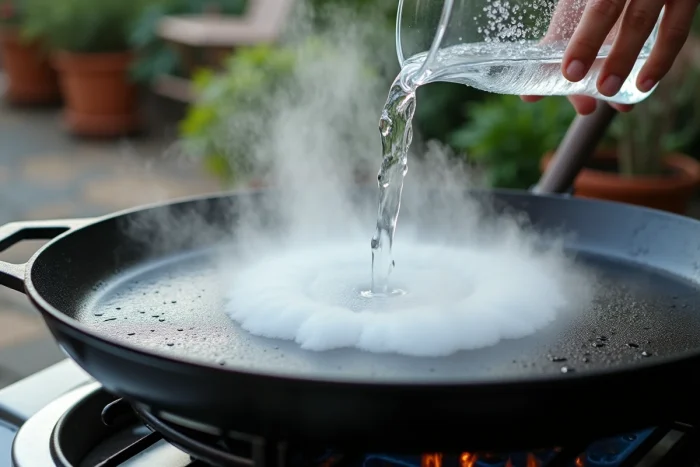
Pour a glass of cold water onto the still hot surface. The thermal shock produces steam that instantly detaches cooked fats. On enamelled cast iron, this technique poses no risk of cracking, as the vitrified enamel withstands temperature variations much better than raw cast iron.
Scrape immediately after deglazing, while the residues are softened. A simple thick paper towel or an absorbent sheet is enough to remove the residual greasy film.
3. Use ice cubes instead of water for a more gradual deglazing
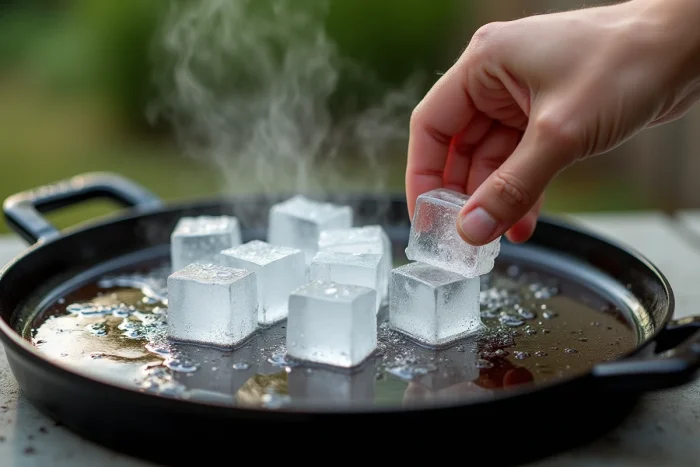
Variation of the classic deglazing: place a handful of ice cubes directly on the hot plate. The cast iron diffuses the steam, and the ice cubes melt slowly, prolonging the detachment action without harsh splashes.
This method is particularly suitable when residues are heavily ingrained. The gradual transition from solid to liquid keeps the surface moist longer, making scraping effortless.
4. Apply diluted white vinegar to dissolve cooked fats
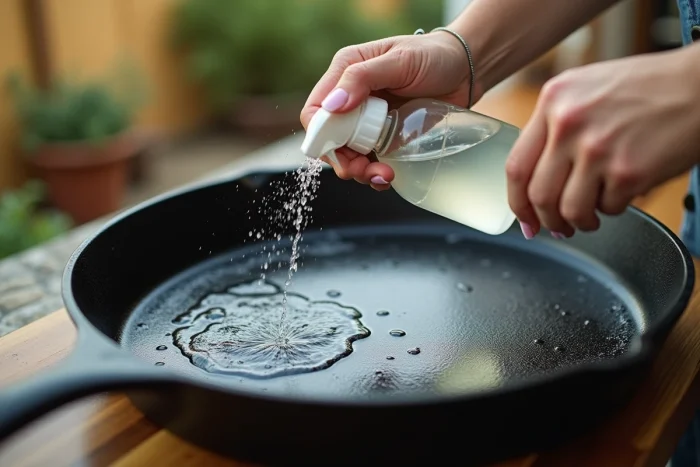
White vinegar is a mild acidic degreaser that does not attack the enamel. Mix it in equal parts with warm water, then spray or pour it onto the cooled plate. Let it sit for a few minutes before scrubbing with a non-abrasive sponge.
White vinegar dissolves fats without altering the enamel layer, unlike chlorinated products or oven cleaners that can dull the surface irreversibly. Rinse thoroughly with clear water after cleaning.
5. Sprinkle with baking soda to treat charred residues
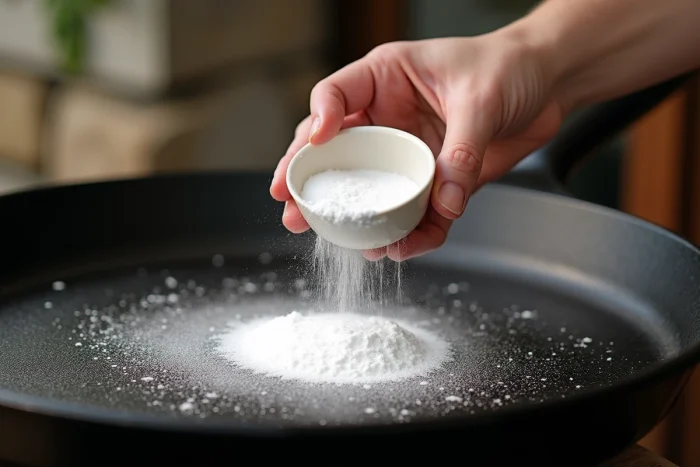
Baking soda acts as a very fine abrasive. Sprinkle it generously on the damp surface, then scrub with a soft sponge or microfiber cloth. The grains dissolve upon contact with water, which limits the risk of scratching the enamel.
For the most stubborn stains, form a thick paste by mixing baking soda with a trickle of water. Apply it to the charred areas and let it sit for about ten minutes. Baking soda softens charred residues without scratching the enamel.
6. Combine white vinegar and baking soda for severe grime
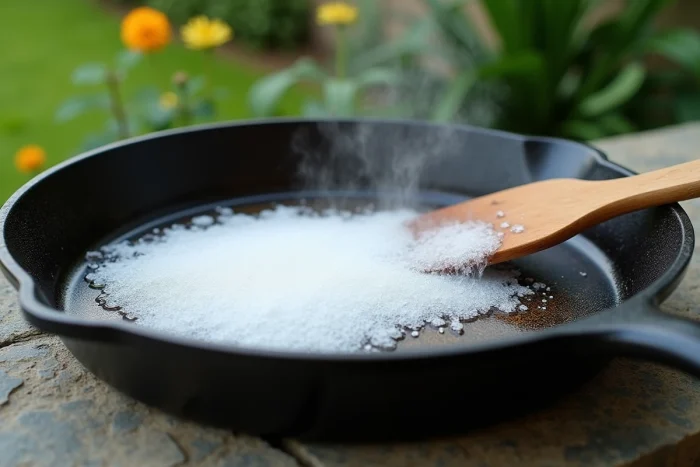
The effervescence produced by the vinegar-baking soda contact mechanically lifts the ingrained residues. First, sprinkle the baking soda on the plate, then pour the white vinegar over it. Let the reaction work for two to three minutes.
Then scrape with the rounded-edge stainless steel spatula, and wipe with a damp cloth. This combination is particularly suitable for griddles neglected during several successive cookings.
7. Avoid steel wool and abrasive metal pads
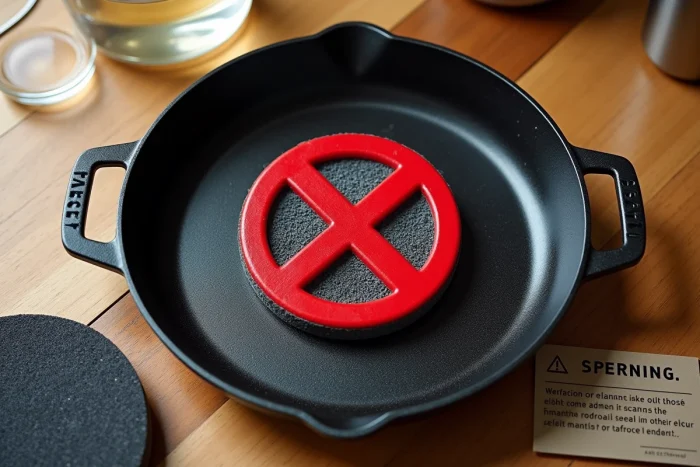
This is the most common trap. Steel wool, Jex pads, and metal brushes are suitable for raw cast iron or steel, but they irreparably scratch the vitrified enamel layer. Once the enamel is damaged, the underlying cast iron oxidizes upon contact with moisture and food acids.
Prefer non-abrasive sponges, microfiber cloths, or soft nylon brushes. Field reports vary on this point regarding green Scotch-Brite sponges: some are soft enough, others too aggressive depending on their weight. Test on a discreet corner before scrubbing the entire surface.
8. Avoid aggressive chemical products and oven cleaners
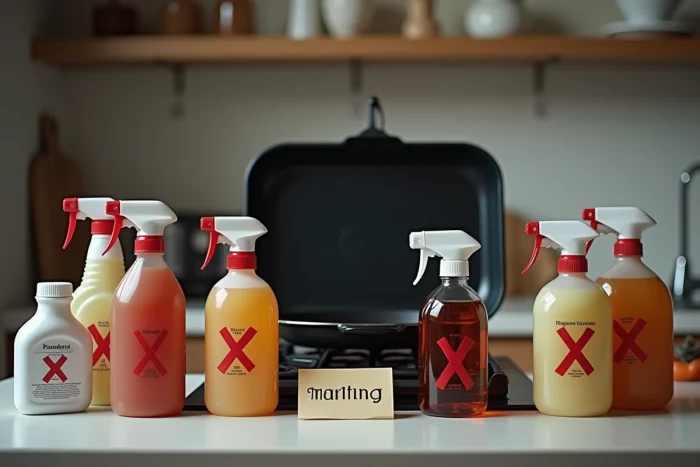
Oven cleaners, concentrated bleach, and industrial degreasers contain corrosive agents that attack the enamel in the medium term. Their repeated use dulls the surface and creates micro-porosities where fats then embed more easily.
Products suitable for enamelled cast iron are limited to a short list:
- Diluted white vinegar (mild acid, safe for enamel)
- Baking soda (fine abrasive, soluble in water)
- Regular dish soap (neutral surfactant, easy rinsing)
- Specific griddle degreasers sold by manufacturers like ENO
9. Lightly oil the plate after each cleaning to protect the enamel
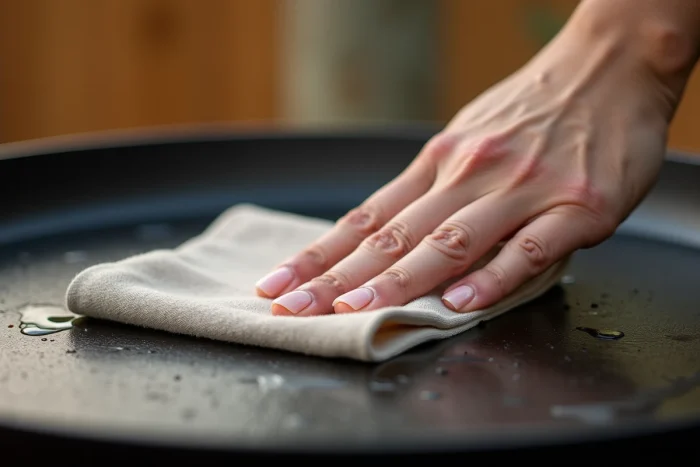
Once the plate is clean and dry, apply a thin film of cooking oil (sunflower, canola) using an absorbent paper. This protective film prevents residual moisture from reaching the cast iron beneath the enamel, especially at the edges where the enamel is sometimes thinner.
This step takes less than a minute and makes a real difference in the longevity of the plate, especially if the griddle is left outside between uses.
10. Use a protective cover to limit soiling between cookings
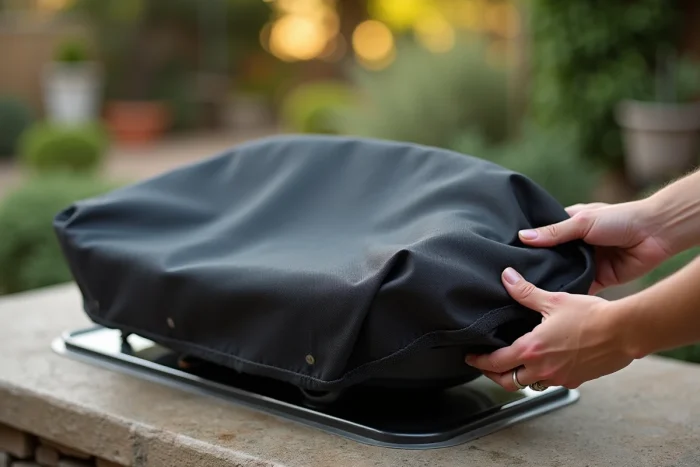
Between uses, dust, pollen, and moisture settle on the plate and form a sticky mixture upon contact with the next heat. A cover suited to the dimensions of your griddle significantly reduces this phenomenon.
Choose a ventilated cover to avoid condensation under the fabric. Condensation trapped under a waterproof cover accelerates the oxidation of areas where the enamel is weakened. Manufacturers like ENO offer specific covers, but a breathable waterproof tarp will also do the job as long as it allows air circulation at the bottom.
Cleaning an enamelled cast iron griddle is based on a simple principle: act quickly after cooking with soft tools and non-corrosive products. The rounded-edge stainless steel spatula, white vinegar, and baking soda cover the vast majority of situations. The most costly mistake remains the use of metal abrasives or chemical strippers, which damage an enamel that is impossible to restore once scratched.