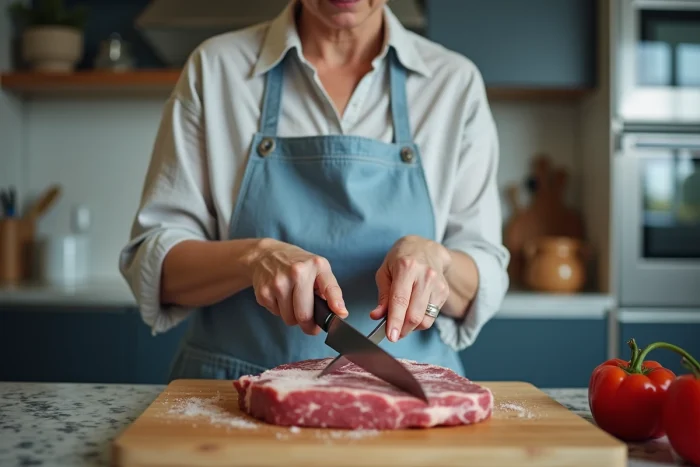
Some well-sharpened knives lose their effectiveness against a piece of meat that is still frozen, while a bread saw, though rarely used in the kitchen, proves to be remarkably effective for this task. The muscle fibers altered by freezing react differently to cutting, complicating usual movements.
Health regulations do not prohibit the cutting of frozen products, provided that contamination risks are managed. However, poor technique can quickly damage the utensil or alter the texture of the resulting pieces. Proven tips can help avoid these pitfalls and optimize the outcome.
Why does frozen meat pose so many challenges in the kitchen?
Frozen foods are appealing for their ability to simplify daily meals, but frozen meat does not yield so easily. Its structure, changed by the cold and hardened by ice, imposes unprecedented resistance under the blade. Usual movements lose their effectiveness, and the risk of slipping increases. Using unsuitable knives exposes one to accidents or chaotic cutting.
The freezer must maintain a stable temperature between -18°C and -21°C: at this level, bacteria stop their activity but do not disappear. Any lapse in the cold chain or handling with bare hands opens the door to contamination during cutting. Therefore, impeccable hygiene is essential: every utensil must be perfectly clean, and every board disinfected. This vigilance, non-negotiable, protects the meat, precious and exposed.
To handle and cut frozen meat safely, it is best to consult reliable sources on how to cut frozen meat. A precise movement, a solid tool, and quick execution make the difference. Prefer rigid-blade knives, saws, or utensils designed for frozen foods. This trio of requirements improves the result, reduces risks, and simplifies preparation.
Clever tools and simple techniques for cutting without hassle
Cutting frozen meat at home often means facing a hard, stubborn material that leaves no room for improvisation. The choice of tool becomes crucial. The frozen food knife, equipped with a thick serrated blade, proves particularly effective. A length of 20 to 30 cm allows you to tackle the muscles frozen by the cold. Stainless steel remains a reliable choice: it resists corrosion and requires little maintenance. Those who prefer sharp edges can opt for carbon steel, which is more demanding to maintain but particularly incisive against ice.
Two elements should be prioritized when choosing a knife:
- Non-slip handle: it ensures a secure grip, even when hands are wet. Polypropylene, POM, or rubber provide a firm and comfortable hold.
- Guard (anti-slip stop): it enhances safety, especially during cuts where pressure is significant.
For large pieces, a butcher’s cleaver or a metal saw can be helpful. Some also use an electric knife or a ham slicer, provided it has a serrated blade designed for frozen foods. Don’t forget: the work surface must remain perfectly stable and clean. Use a board dedicated to meat, thoroughly cleaned before and after use.
Technique is as important as the tool: favor long and steady movements. Let the blade do the work without unnecessary force to preserve the texture of the meat. A well-sharpened knife, regularly maintained, limits risks and makes the task easier, even on hard pieces like stone.
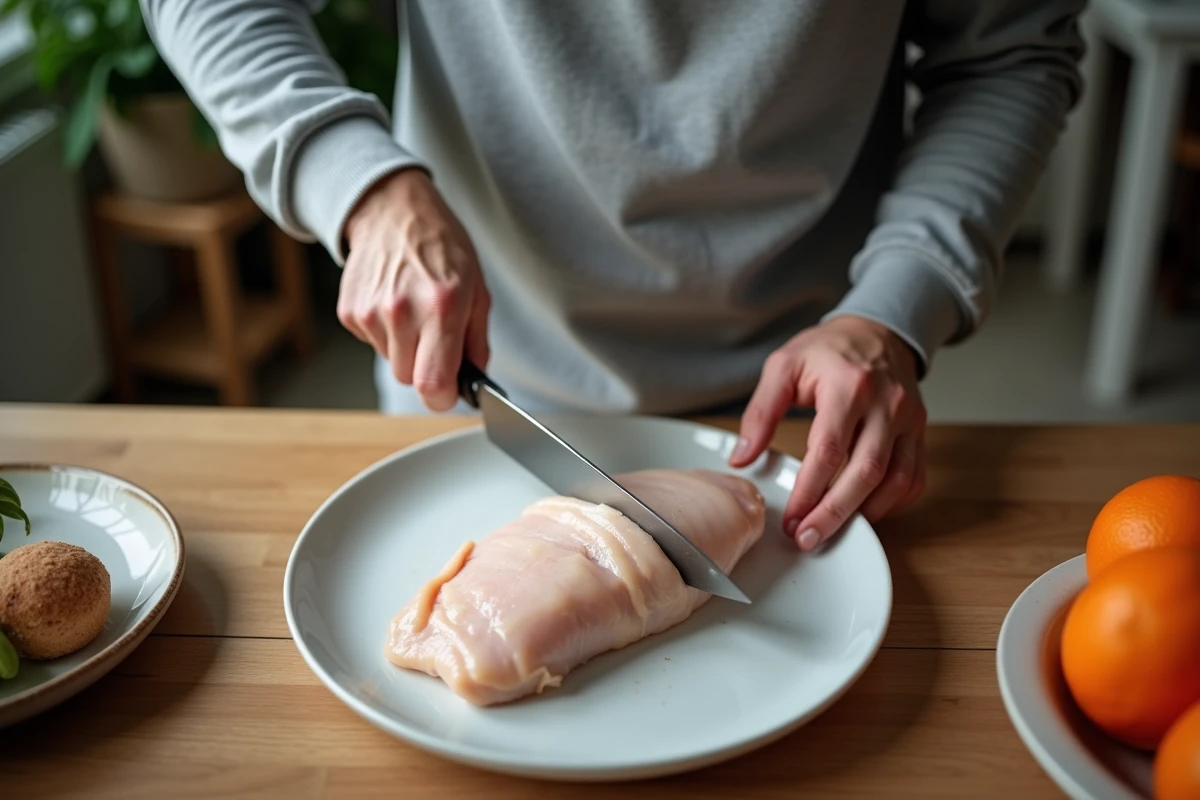
Simple home tips to save time and preserve the quality of your meat
Everything starts with preparation. Wrap each portion of meat in plastic wrap or an individual freezer bag before placing them in the freezer. This method avoids the “compact block” effect, simplifies cutting, and reduces waste. A hermetic container protects each piece, limits drying out, and prevents odor transfer.
To make the task easier, consider separating the meat right after taking it out of the freezer. Let it rest for a few minutes at room temperature, but never more than ten minutes before cutting. The surface softens, while the center remains hard: this is the ideal compromise for a clean cut. If time is tight, a partial thaw in the refrigerator (30 to 60 minutes) softens the outer layer of the meat without ever leaving it exposed to the air or in direct sunlight, to avoid any bacterial danger.
Rapid thawing in a container of water at 60°C works well, provided the meat is placed in a well-sealed bag. This warm bath shortens the waiting time without starting the cooking process. The microwave can be useful for small pieces, but be careful with the power: the texture may suffer if not monitored closely.
Here are some hygiene and practice rules to keep in mind:
- Use a wooden or plastic board, always perfectly clean, for each cut.
- Clean knives and the work surface immediately after use to limit the proliferation of microbes.
Cutting frozen meat is not a foregone conclusion: with the right movements, a carefully chosen tool, and a few precautions, this step loses its feared character and becomes a mastered part of modern cooking.