
In France, keeping a marten as a pet remains prohibited, while the ferret, a product of domestication, enjoys a well-defined legal status. Despite a shared membership in the mustelid family, these two mammals exhibit radically different behaviors and needs.
Misguided owners often confuse the marten and the ferret, leading to problematic situations for both the animal and the humans involved. The legal, health, and behavioral stakes make it essential to make an informed choice between these two species.
Marten and Ferret: Two Small Mammals with Distinct Lifestyles
The marten (martes foina) and the ferret (mustela putorius furo) share a family resemblance, but they don’t really look alike where it matters. Sleek body, bushy tail, pointed snout: the resemblance stops at appearance. What lies behind this facade is a fundamental difference, a contrast between wild instinct and companionship with humans.
On the marten side, the rule is simple: it tolerates neither cage nor forced proximity. Solitary and discreet, it prefers attics and hedges to sofas and cuddles. Its daily life revolves around hunting, nocturnal exploration, and freedom. Capturing or keeping it confined leads to stress, aggression, and often ends badly, both for the marten and for those who attempted the adventure.
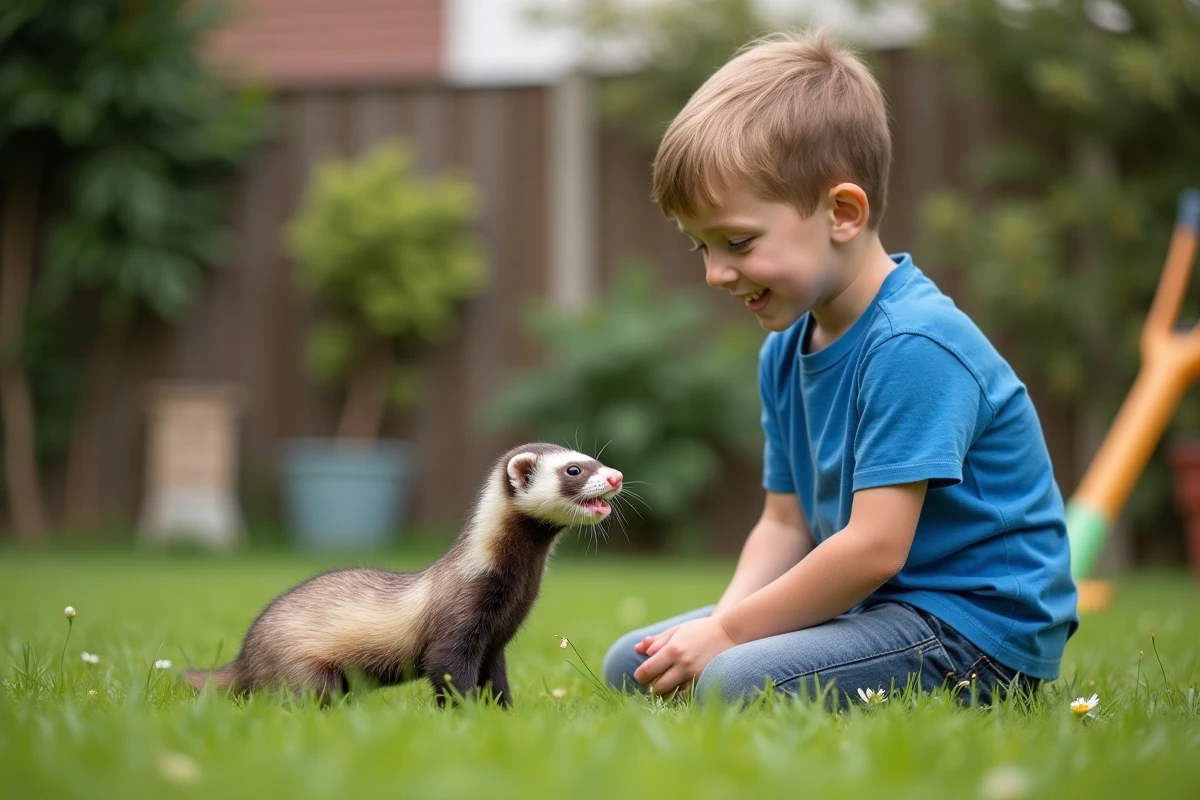
The ferret, on the other hand, was domesticated by humans thousands of years ago. This descendant of the European polecat (mustela putorius) has traded its flight instinct for curiosity, a love of play, and a desire for contact. This little predator thrives in a home where attention is plentiful, demands activities, seeks interactions, and adapts quite well to domestic life. Adopting a ferret as a pet means choosing a small mammal that is sociable, lively, and requires daily attention and a deep understanding of its needs.
The ferret-marten difference boils down to a question of harmony: one accepts no constraints, while the other has learned to live alongside humans. Between the marten, fierce and elusive, and the ferret, a playmate and cuddle buddy, it’s not a matter of aesthetics or originality. Welcoming an animal requires respecting what it is, without trying to bend it to our desires.
What Criteria Should You Prioritize When Choosing the Right Pet for You?
Before opening your door to a pet, you need to look beyond a mere crush. Think about what you expect from this relationship, your routine, your experience, and your ability to provide a true presence. The ferret as a pet is appealing due to its liveliness, but it has its demands and won’t settle for being decorative.
Here are the main aspects to consider for making a responsible choice:
- Lifestyle: The domestic ferret is not meant to be confined in a cage all day. It needs to explore, play, and discover its environment. Arrange your home to eliminate any dangers: fragile objects, toxic products, and inaccessible corners should be removed from its play area.
- Odor and Maintenance: The strict carnivore ferret has a natural, musky odor due to its glands. Even sterilization does not completely eliminate it. Therefore, you must accept this particular scent and dedicate time to the regular maintenance of its living space.
- Time Commitment: A ferret as a pet cannot tolerate isolation. It bonds with its humans, enjoys the company of its peers, and struggles with prolonged absence. If your schedule often keeps you away, consider a more independent animal, such as a cat.
- Children and Other Animals: Coexisting with a dog or a cat is possible with a gradual and supervised introduction. The ferret, playful but sometimes rough, requires vigilance around young children to avoid bites or mishaps.
Whether it is an albino ferret or one of another color, its needs remain the same. Sterilization, recommended for both males and females, limits certain behaviors and protects the animal’s health. Also consider its longevity: a ferret can live over eight years, with specific veterinary costs. Committing means anticipating, researching, and above all, respecting the lifestyle of the chosen animal.
Practical Questions and Tips for Successful Adoption
Welcoming a domestic ferret requires preparation. Regulations in France impose several steps: each NAC must be identified by a subcutaneous microchip, vaccinated, and sometimes registered depending on the department. Certain areas affected by rabies require additional formalities: a mandatory visit to the prefecture and the veterinarian is necessary before any adoption.
The ferret vaccination (against distemper and rabies) protects the animal and its surroundings. An annual visit to a veterinarian experienced with small mammals remains a precaution to maintain. Sterilization or castration reduces odor, prevents health issues, and behaviors related to reproduction, especially in females.
To meet the energy of the ferret, provide an appropriate environment: a spacious cage, tunnels, hiding spots, and accessories like hammocks. Daily supervised outings are essential. In terms of diet, prioritize food rich in animal proteins, true to its strict carnivore diet.
Choose a registered breeder or a recognized association to adopt your ferret. Demand all documentation: identification, vaccinations, origin. This commitment goes far beyond a simple purchase: it involves investing in the long term and ensuring the animal has a living environment that complies with regulations and its real needs. Taking in a ferret means accepting to walk through life with a demanding, surprising, and deeply affectionate companion.